Twisting Music Education
Published: May 23, 2020 | Category: Excitement, Composition, growing knowledge
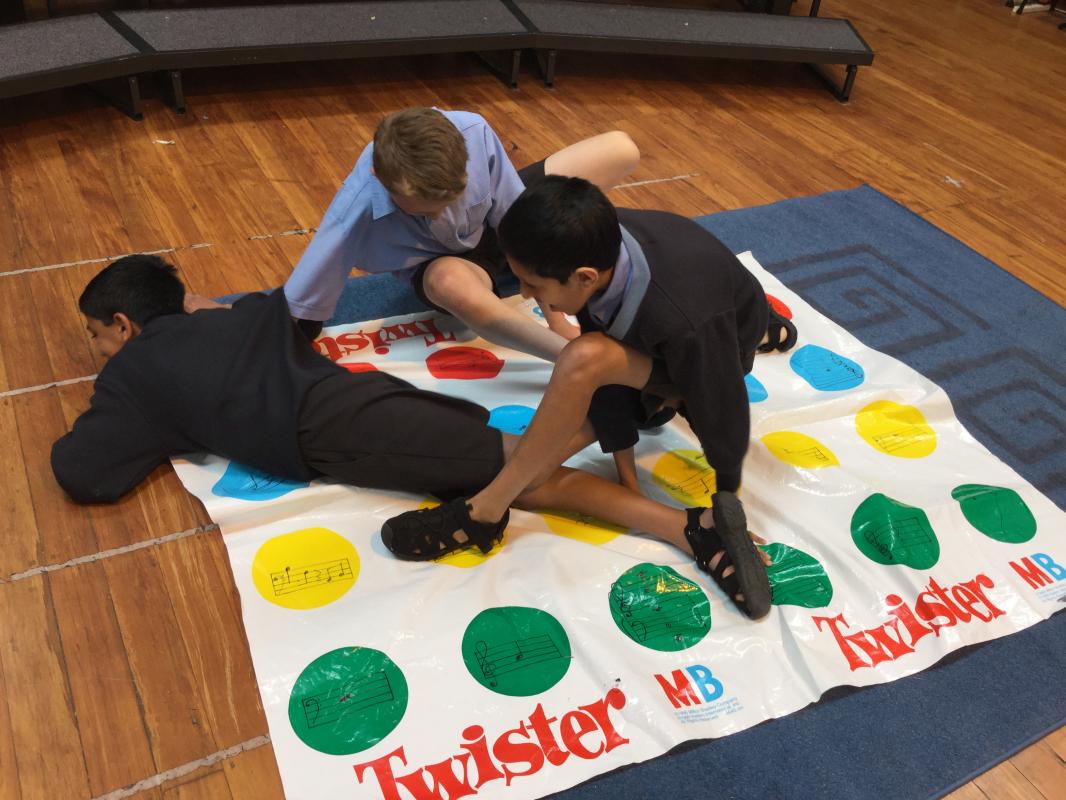
How do I twist all the bits together and advocate for music education in the 21st century.
I still want to be the most inspirational music teacher there could be. Well within reason! Ending up in a wheelchair has made this more challenging. However, Lockdown came and I decided to use the time to spark some more ideas for me to become or keep being an inspirational music teacher. Taking part in the MOOC “The Place of Music in 21st Century Education” underpinned much of my philosophy of teaching. Although I very much believe in embracing as many “tech” tools as possible, can become slightly frustrating when the up-to-date tools are not readily at your fingertips and as I believe in a variety of “hands on” activities, not having enough resources has made me think outside the box. Things like using cut up pool noodles to teach percussion rather than using drumsticks.
I have enjoyed blogging and reading other blogs. Instead of going on facebook or looking through Pintrest I have joined groups such as MENZA, Music Education in New Zealand. I used to be on the board of this a long time ago and I soon found out that this organisation is really on point. Lockdown had the effect of growing MENZA’s membership. This is where the spark for my learning flared up again; where I found a link to Coursera and this course with Dr James Humberstone. Note to self read and write blogs,rather than flicking through facebook.
Keeping up with my own creativity, this year’s goal. Thank goodness for Lockdown. I learnt so much and had time to try so many things. Many programmes were offered free for 3 months and I certainly took advantage of this. I wrote a piece for Jazz Band and for Chamber Music on Noteflight. I created many pieces and created lesson plans for my students on Soundtrap. I practiced many of the instruments I enjoy playing. The new software allowed me to dabble everyday, and led to having to change settings on the computer, go on youtube for more information, I tried ideas with adding microphone and instruments, which it appears is never as easy as just plugging something into a device. I also learnt that I had to put an alarm clock on - time management.
Flipped Learning and Online Learning: This is when it is even more crucial to meet your students where they are. With Lockdown you also had to be careful that you didn’t push your students too much. At least one on one you have a better idea of the sort of device available, internet speed, computer skills etc. It was exactly the same with the practical side of things, the hands-on activities. Now that we are all back in class I am much more comfortable knowing that I can read my students a little better and understanding the tools I have on hand to propel their learning.
Listening to Podcasts will continue to be in my plan of action. Podcasts come in all shapes and sizes and we can learn so much from these; connecting modern with classical. By analysing scores and history through the years we can connect so much of the rich literacy of music in a way this generation of learners appreciate.
Composing whichever way It was suggested during this course that those who write the curriculum have to catch up with the 21st century. I couldn’t agree more. When you think of the many skills a DJ needs to be successful, it is a little disconcerting that software like Soundtrap and Mixcraft are not accepted as a standard tool for composition. If we can analyse these scores just like we do with traditional notated scores I think we are onto a winner especially when students are keen to create and record their own loops.
Project Based Learning I believe was a pedagogy used many years ago when I was at school. This results in the learning being individualised and holistic where students are learning as many skills as possible from one idea. It is even better if the students can teach and share what they have learnt. There is so much power in presenting what you have researched, going off in different branches to learn more than just a snapshot of information.
I will always look for ways to encourage my students to “set themselves up success” and hope that I can produce “A-Ha” moments everyday for them.
I hope I can produce an "A-Ha" moment by planning a lesson for my Year 11's that uses 10 bars of music from a song they are all singing in choir. They know the song well and can already sing this in three part harmony. It has a piano accompaniment and suggested body percussion. I intend to create a Project to understand compositional devices, motifs, melody, counterpoint, harmony, arrangement, the list goes on.....